Robert Avenue, St. Albans
- Architect: Uskuri Theobold Architects
- Developer/Contractor: Tudor D&B
- Location: Robert Avenue, St Albans in Hertfordshire, North of London
- Project type: Full-scale renovation of an existing bungalow, including an extension and additional rooms in the roof, transforming it from a two-bed to a four-bed home.
Our role
We were engaged as structural engineers, introduced to the project by the architect and instructed by the client. Our task was to ensure the structural integrity of the design while optimising efficiency and cost-effectiveness.
Project requirements and design process
Eliminating the need for cranked steel beams
A common challenge with room-in-the-roof or crown roof construction is the necessity for cranked steel beams. These are beams that are bent or ‘cranked’ at specific angles to accommodate architectural features such as open spaces, sloped ceilings or pitched roofs. While sometimes unavoidable, cranked steel beams add complexity due to the precision required in fabrication and installation.
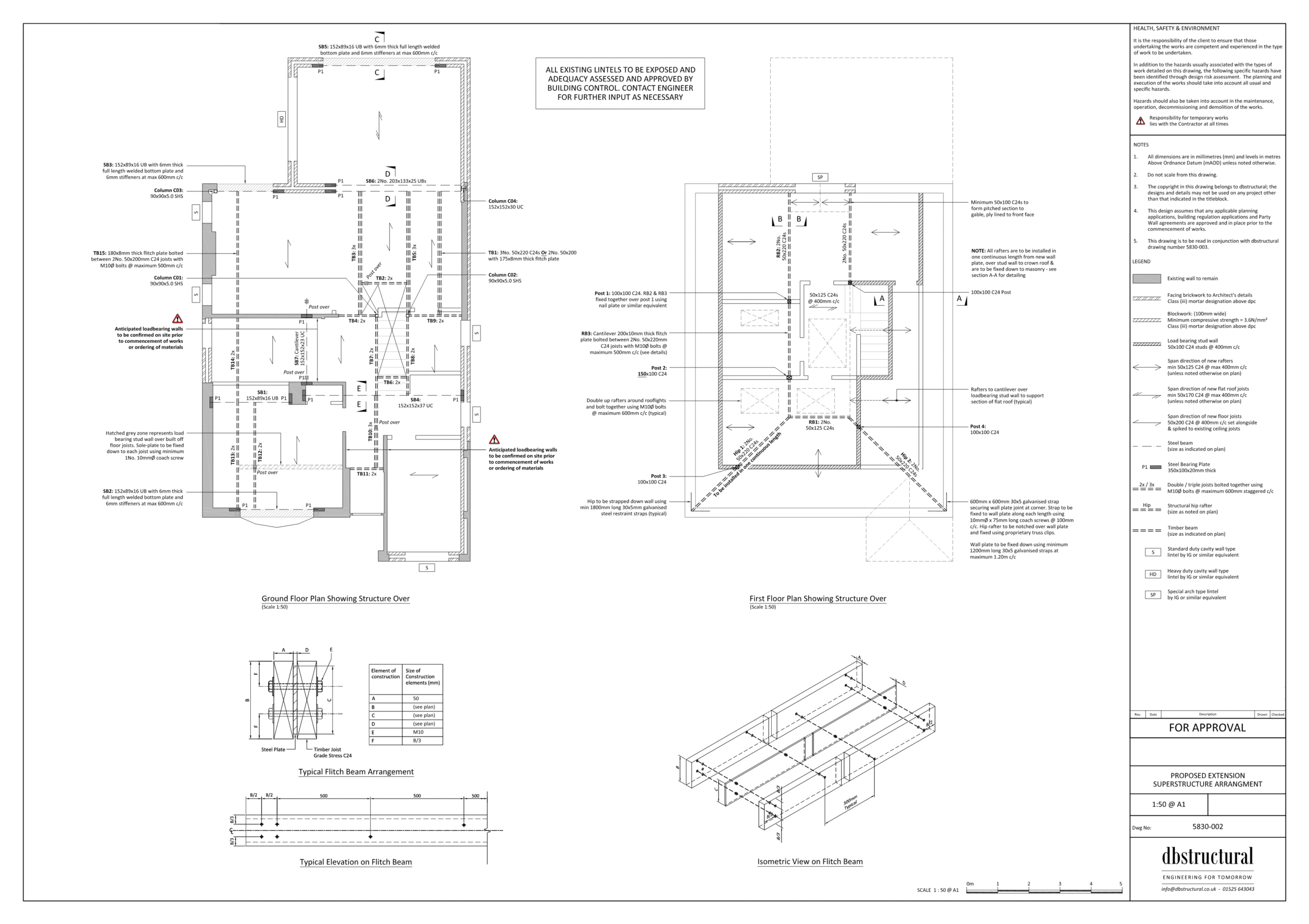
To simplify the structure and reduce costs, dbstructural devised an alternative solution by strategically incorporating hidden posts within internal partitions. Additionally, we used cantilevering rafters to support the flat roof elements, successfully eliminating the need for cranked steel beam requirements. This approach saved significant time, budget, and resources, which was highly valued by both the client and the contractors.
Feature round window
A stunning feature of this renovation was the round window in the master bedroom, offering picturesque views over the surrounding fields. Our structural design ensured that the necessary support was provided while maintaining the aesthetic integrity of this unique element.
Innovative use of existing structure
To further enhance efficiency, we repurposed a redundant chimney breast to support some of the steelwork, reducing the need for additional steel elements and materials. Where possible, multiple timber joists were used for support, providing a effective and sustainable solution.
Underpinning existing foundations
The existing rear elevation foundations consisted of approximately 120mm thick concrete, which was insufficient to support the new structure. Consequently, underpinning was essential to reach a sufficient depth, allowing for the installation of a suspended beam and block floor.
Conclusion
This project showcased how careful structural planning and clever engineering can eliminate unnecessary complexities, such as cranked steels, while enhancing efficiency and sustainability. By leveraging existing structures and optimising material use, we delivered a solution that met both the architectural vision and practical construction needs, ensuring a successful transformation of this bungalow into a spacious and functional family home.
– Take a closer look –