
Bespoke homes

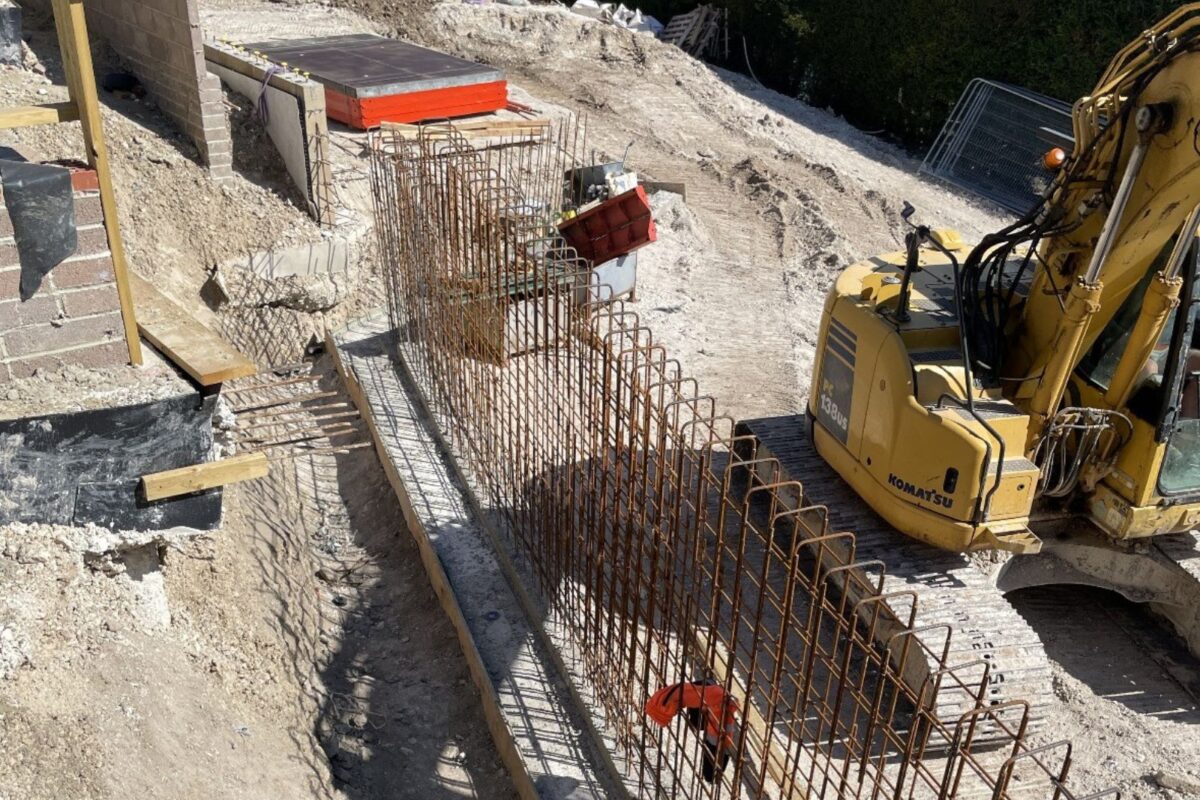
External works design is often intricate and highly site-specific, requiring a careful balance of strength, longevity, cost efficiency and adaptability. Every project presents its own requirements, from ground conditions to site constraints, meaning no two designs are ever the same.
External works done well should enhance a site’s look and feel. Our design and detail comprise external levels, external works and highways construction details.
Working with dbstructural on our steel frame nursery project was an excellent experience from start to finish. Their team provided clear, practical design solutions that made the structural and drainage elements come together seamlessly. Communication was proactive, drawings were delivered on time, and their collaborative approach made coordination with our site team effortless. The end result was a well-detailed design that made the build straightforward. We’ve worked with dbstructural for many years and look forward to continuing to do so on future projects. Wayne Creamer Owner | F&W Creamer (main contractor)
External works relates to all external (non-internal) relations, road levels, kerb heights and levels, gradients, proposed topography, drainage, infrastructure.
Yes, various building regulations apply to external works, as external works is a broad term in construction which relates to a variety of specific work processes. Regs such as Part H(Drainage and waste disposal) Part M&K, Part A, Part B and Part P.
A CBR Test is a way of evaluating the strength of subgrade soil for the design of roads, foundations and any other paved area. This test measures soil strength and stiffness, to ensure the design can be as efficient and durable as possible.
A permeable surface is a material that allows water to penetrate through and be collected or infiltrated into the ground below. In areas of good infiltration rates, water can be infiltrated straight into the sub-strata, and areas of bad infiltration the surface water can be collected in voids within the sub-base, which is ‘Tanked’ (waterproofed around the edge to contain the water) and then discharged to the outfall. This is really helpful in design as it gives support to the system as it acts as a form of storage.
An impermeable surface is a material that does not allow water to penetrate through. Surface water is collected on these surfaces by sloping the material in a direction towards gullies or a collection of.


